
Watercolor Methodology
A Process to Paint Anything
Beginner’s Classes
Watercolor Success Isn’t Magic — It’s Method.
In my watercolor classes, I teach a clear, repeatable methodology grounded in professional practice. Students work with high-quality, professional-grade paints and papers while learning not only essential color theory, but also the properties and behavior of individual pigments. This foundation is critical for beginner and intermediate painters, as it explains why the colors in each of the three perfectly balanced triads within a limited palette form an ideal starter set.
We explore pigment makeup in depth so artists understand how to intentionally achieve the color, value, transparency, and density they are aiming for—rather than relying on trial and error. We also cover the essential role of water and the painting environment, including humidity, drying time, and surface control, as well as advanced watercolor concepts such as ghosting, saving the white of the paper, and managing edges and timing.
Beyond color, the class addresses composition, light, shade, and shadow, and how to create depth and atmosphere in a painting. Students also learn the purposeful use of brushes, the structure and behavior of different watercolor papers, and a range of tools, equipment, and studio practices that support consistent, confident, and luminous results.
In each of my 2–3 hour classes, I teach from my Watercolor Methodology, with each session focused on a specific technique and stage of the process. Every class is built around a carefully designed artwork that highlights key elements of the methodology, giving students hands-on experience with how and why the process works. These focused lessons provide artists with the essential tools, clarity, and confidence they need to get started—and to grow—in the wonderful world of watercolor.
Lessons Offered
The Two Sides of the Studio
A fireside chat on being both a fine art artist and a commercial artist invites an honest, reflective conversation about living with two creative identities under one roof. Tim Thomas discusses The Two Sides of the Studio with listeners, describing how one side is devoted to exploration—where curiosity leads, materials are tested, and ideas are pursued to fulfill personal needs and creative desires. This is the space where art is made for the sake of discovery, instinct, and expression, free from external expectations and measured not by profit, but by growth and artistic satisfaction.
On the other side of the studio, Thomas addresses the realities of making a living through art. This commercial practice is where projects meet deadlines, clients are served, payroll is met, and the costs of running a studio—rent, utilities, and materials—are paid. He speaks candidly about balancing creativity with responsibility, and how professionalism, consistency, and business acumen are essential to sustaining an artistic career. The fireside chat highlights how these two sides are not opposing forces, but complementary ones—together forming a practical, honest model for building a life in art while still paying the bills.
Tim resides in Montgomery, Alabama and travels with his wife Terri. Tim talks to classrooms and organizations on being and author, illustrator, self-publisher, business owner and Navy submarine veteran, and the choices he made to live as an artist.
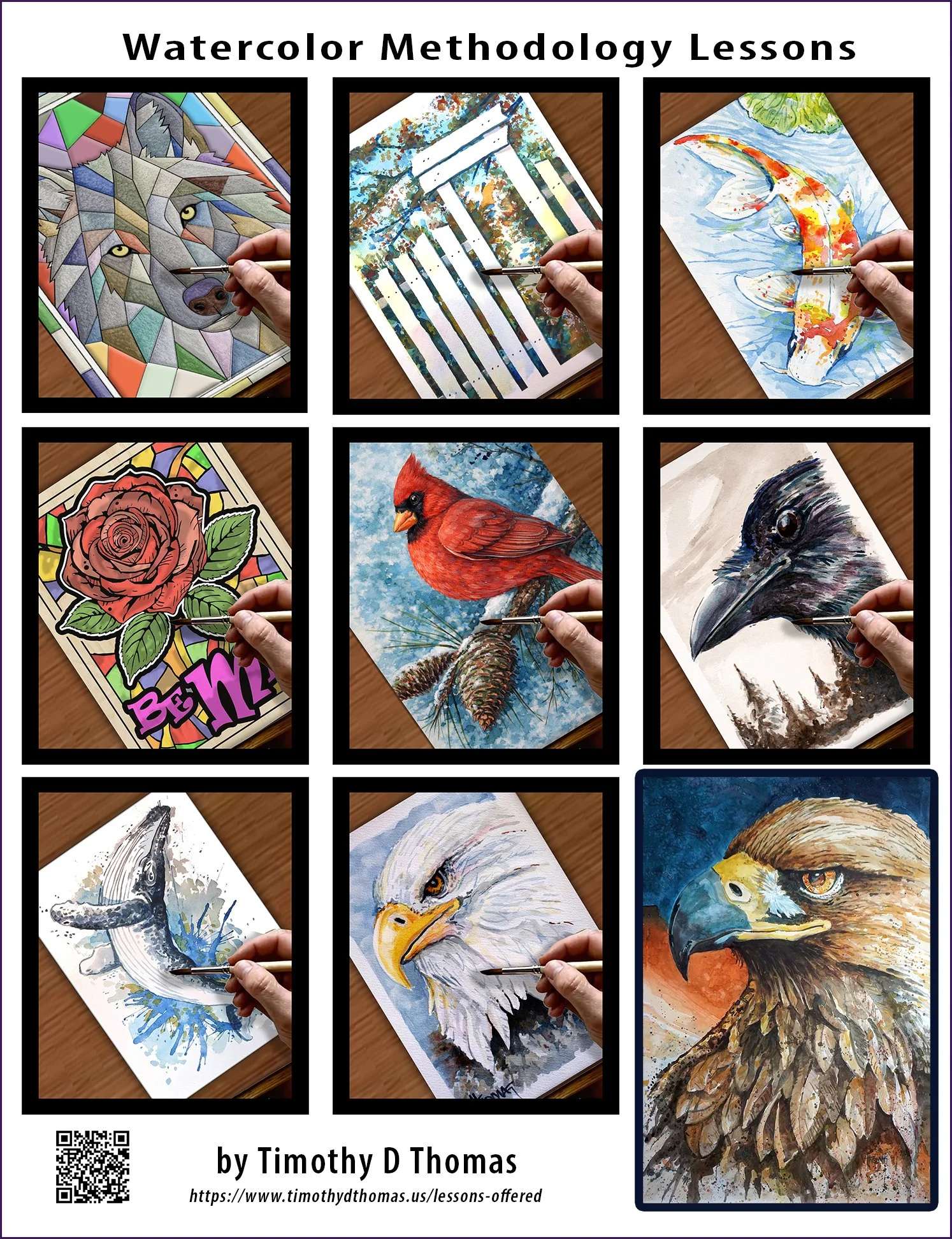
Click HERE to DOWNLOAD Watercolor Methodology Lessons.pdf
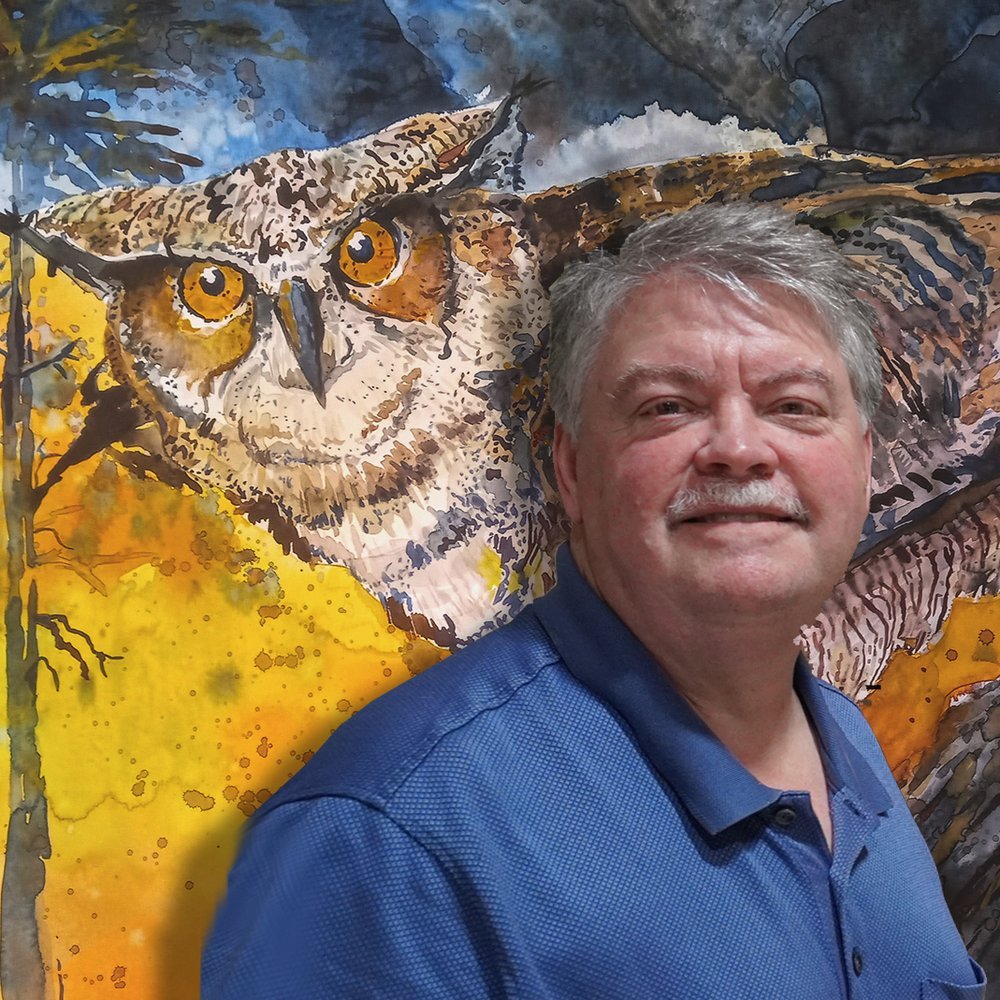
Timothy D Thomas
Gray Wolf
Learning how to mix gray and apply values using the perfect triads.Garden Gate
Learning how to leave white and create contrast while producing foreground, mid-ground, and background.Koi Pond
Learn how to “ghost in” an image in a simple composition style while applying water effect techniques.Painting on Wood
Learn the techniques of painting on wood or other substrates with watercolor.The Cardinal
The color you see first is the last color you paint—painting everything but red.The Raven
Mixing paints to produce darks and creating the illusion of black.The Humpback Whale
Painted in monochromatic blues, then adding the complementary color using the straw and puff techniques.Bald Eagle
Painting a white Bald Eagle portrait on a white sheet of paper.Full Size Art
Painting a full-size artwork on a large piece of paper or illustration board.*See detailed lessons below.
Introduction to the Palette
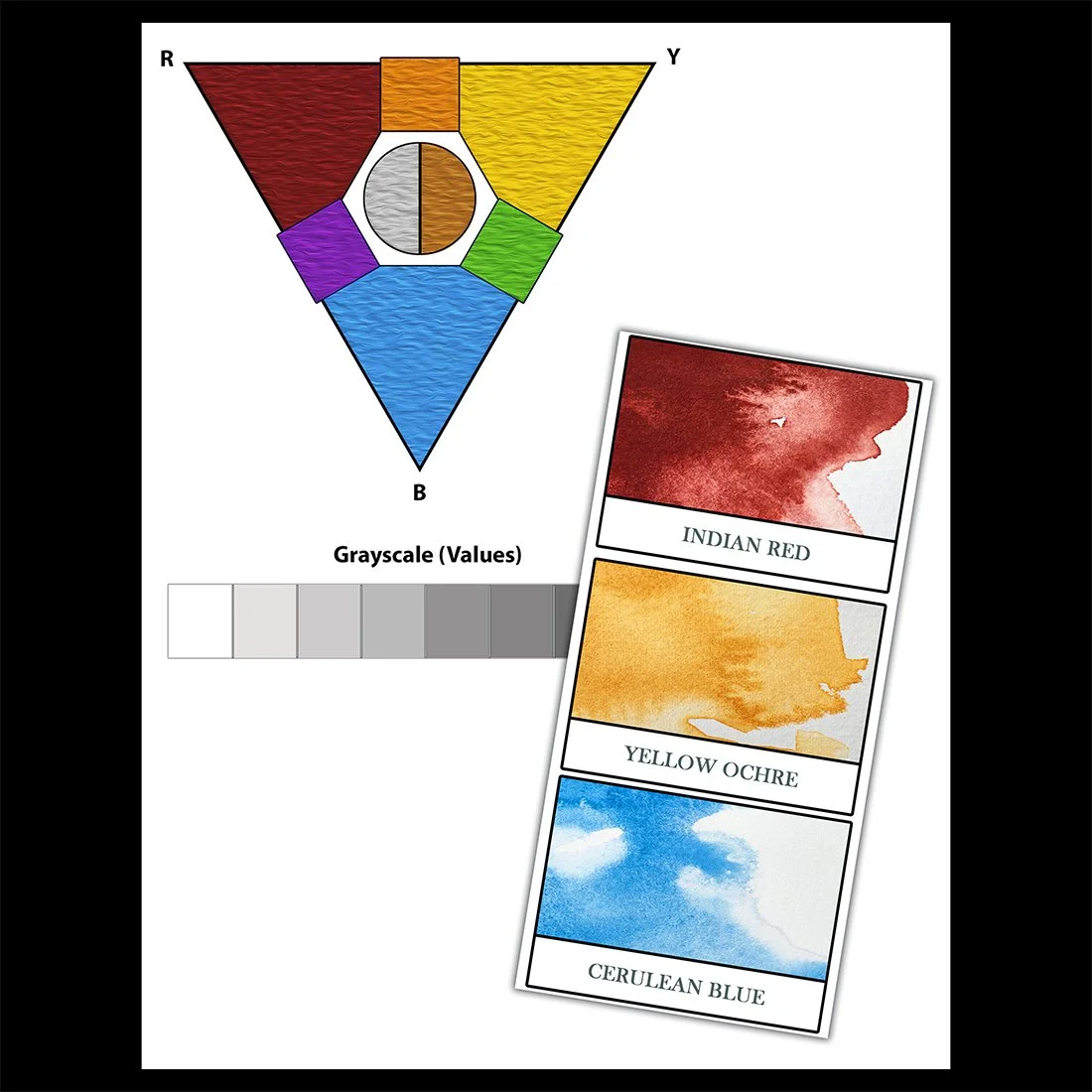
Painting Perfect Triads 9x12 inches
The White Fence
This class is designed as a 180-240 minute session, with the duration tailored to the number of participants and the depth of instruction requested by the host organization.
The lesson is highly adaptable, allowing it to function as either an in-depth instructional experience or a more relaxed, guided creative session.
Lesson 1 introduces students to painting the three primary color perfect triads—red, yellow, and blue—on watercolor paper as foundational references for understanding color relationships and mixing methodology. Students will create three separate triad charts, carefully placing each primary color at equal distances to form a balanced triangle, then blending between each pair to observe the creation of clean, vibrant secondary colors
(orange, green, and violet). Emphasis is placed on achieving perfect triads through controlled water-to-pigment ratios and clean brush practices to maintain color clarity. Students will also explore how perfect triads mix together to create balanced grays and a full range of values,
and how layering these grays gradually can build depth to achieve very dark tones—even near black—without using black paint. These completed triads will serve as essential visual references, supporting color harmony, value control, and confident, intentional mixing in all future watercolor studies.
Watercolor Methodology: Watercolor Success is Not Magic - It’s Method!
by Tim & Terri Thomas (Class for Beginner/ Intermediate)
Lesson 1
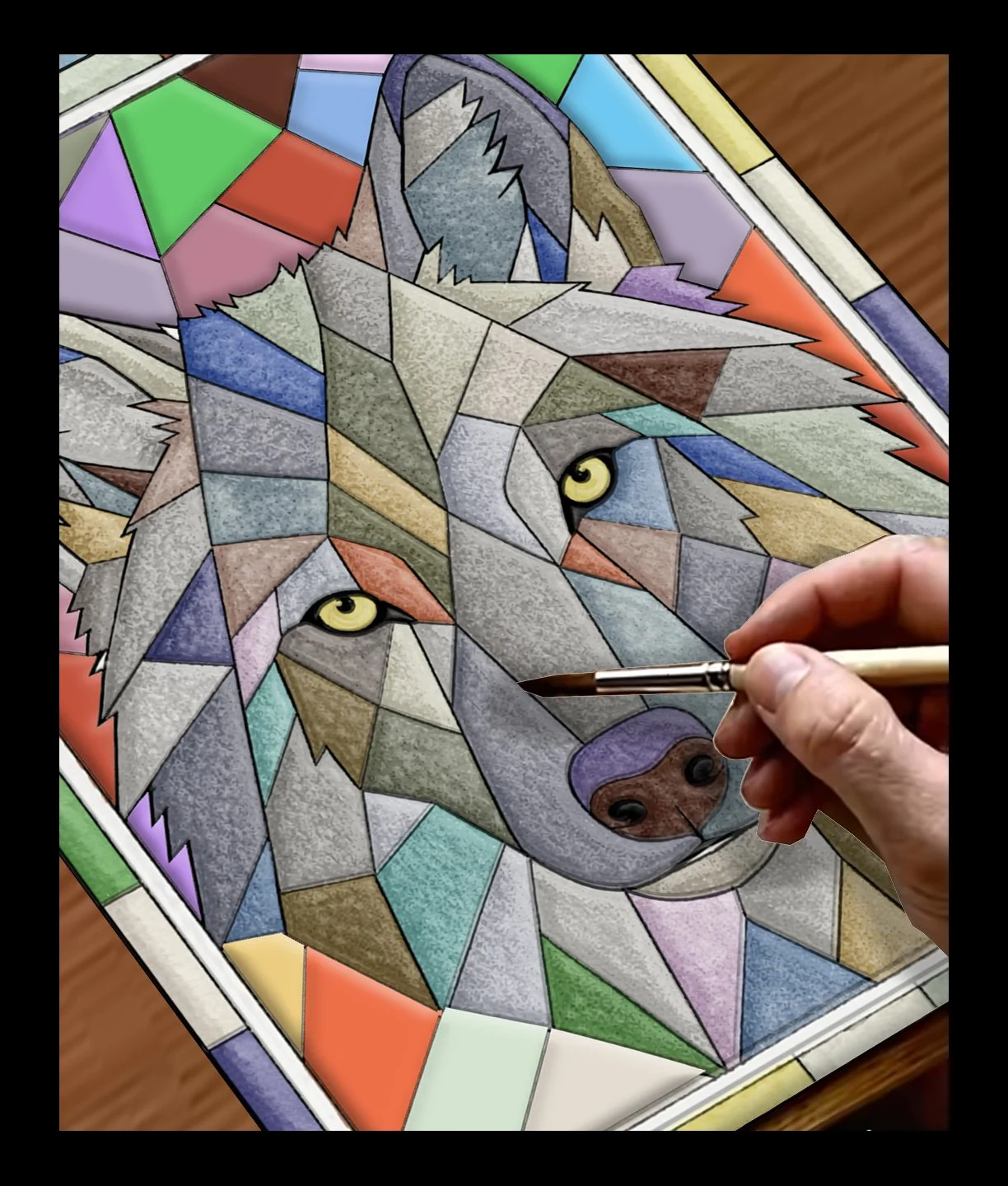
Gray Wolf 9x12 inches
Gray Wolf
This class is designed as a 130-180 minute session, with the duration tailored to the number of participants and the depth of instruction requested by the host organization.
The lesson is highly adaptable, allowing it to function as either an in-depth instructional experience or a more relaxed, guided creative session.
Lesson 1 introduces students to painting the three primary color perfect triads—red, yellow, and blue—on watercolor paper as foundational references for understanding color relationships and color mixing methods. Students will use each perfect triad to mix the secondary colors—orange, green, and violet—as well as a full range of balanced grays, then apply these mixtures to create a stained-glass style Gray Wolf painting.
Emphasis is placed on achieving clean, vibrant perfect triads through controlled water-to-pigment ratios, mixing the triads to create values, and layering colors gradually to build depth and richness. Students will practice essential round brush skills and techniques, learning how brush control, pressure, and water management affect the application of paint and the clarity of each mixture. Careful brush-cleaning practices will also be reinforced to preserve color purity and accuracy.
Students will explore how complementary mixtures within the triads create neutral grays and how these grays can be layered to achieve strong contrast, rich shadows, and very dark values—even approaching black—without using black paint.
These completed triads will serve as essential visual references throughout future watercolor studies, helping students develop stronger color harmony, value control, confident brush handling, and greater intentionality in expressive watercolor painting.
Watercolor Methodology: Watercolor Success is Not Magic - It’s Method!
by Tim & Terri Thomas (Class for Beginner/ Intermediate)
Lesson 2
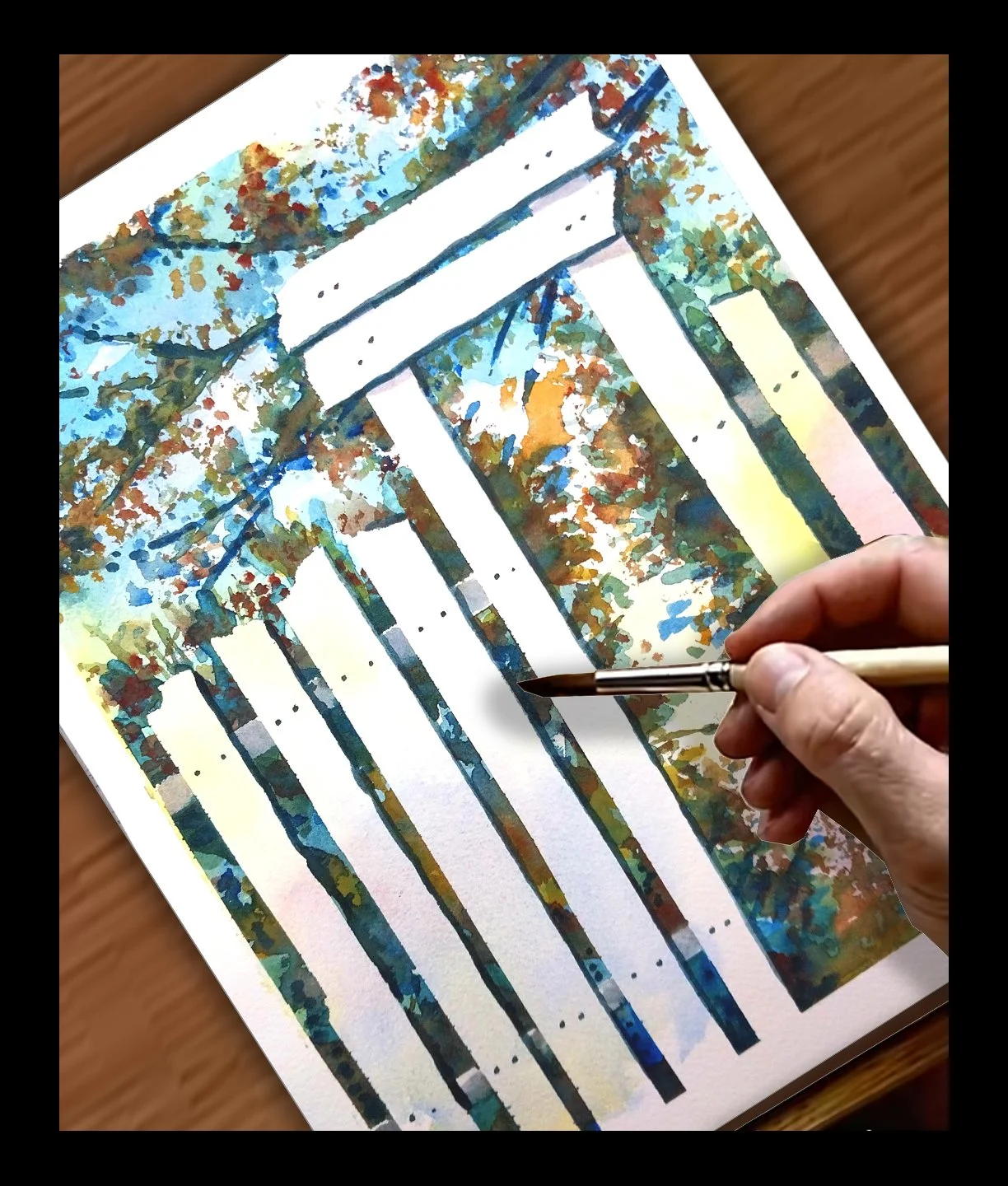
Garden Gate 9x12 inches
Garden Gate
This class is designed as a 180-240 minute session, with the duration tailored to the number of participants and the depth of instruction requested by the host organization.
The lesson is highly adaptable, allowing it to function as either an in-depth instructional experience or a more relaxed, guided creative session.
Lesson 2 of Tim Thomas’s Watercolor Methodology introduces students to painting a white garden gate and fence using the Illuminous color undercoating technique. This foundational approach prepares the paper with subtle, light washes designed to enhance the illusion of sunlight and luminosity within the finished painting.
The lesson demonstrates the use of masking techniques to preserve the white of the paper while successive layers of pigment are applied. Students explore painting the background to strengthen the visual impact of the foreground, with emphasis placed on the contrast between dark values and untouched white areas. Proper sequencing of painter’s tape application and the intentional offsetting of the gate reinforce key compositional concepts, including spacing, positive and negative space, and effective masking practices.
Instruction also covers the nine pigments that form the three perfect color triads central to this methodology, along with guidance on paper selection—brand, type, and weight—and the specific brushes used throughout the process.
Additional core elements include color application, water control, value development, and one of the most critical principles of watercolor painting: creating depth through the relationship of foreground, midground, and background.
Watercolor Methodology: Watercolor Success is Not Magic - It’s Method!
by Tim & Terri Thomas (Class for Beginner/ Intermediate)
Lesson 3
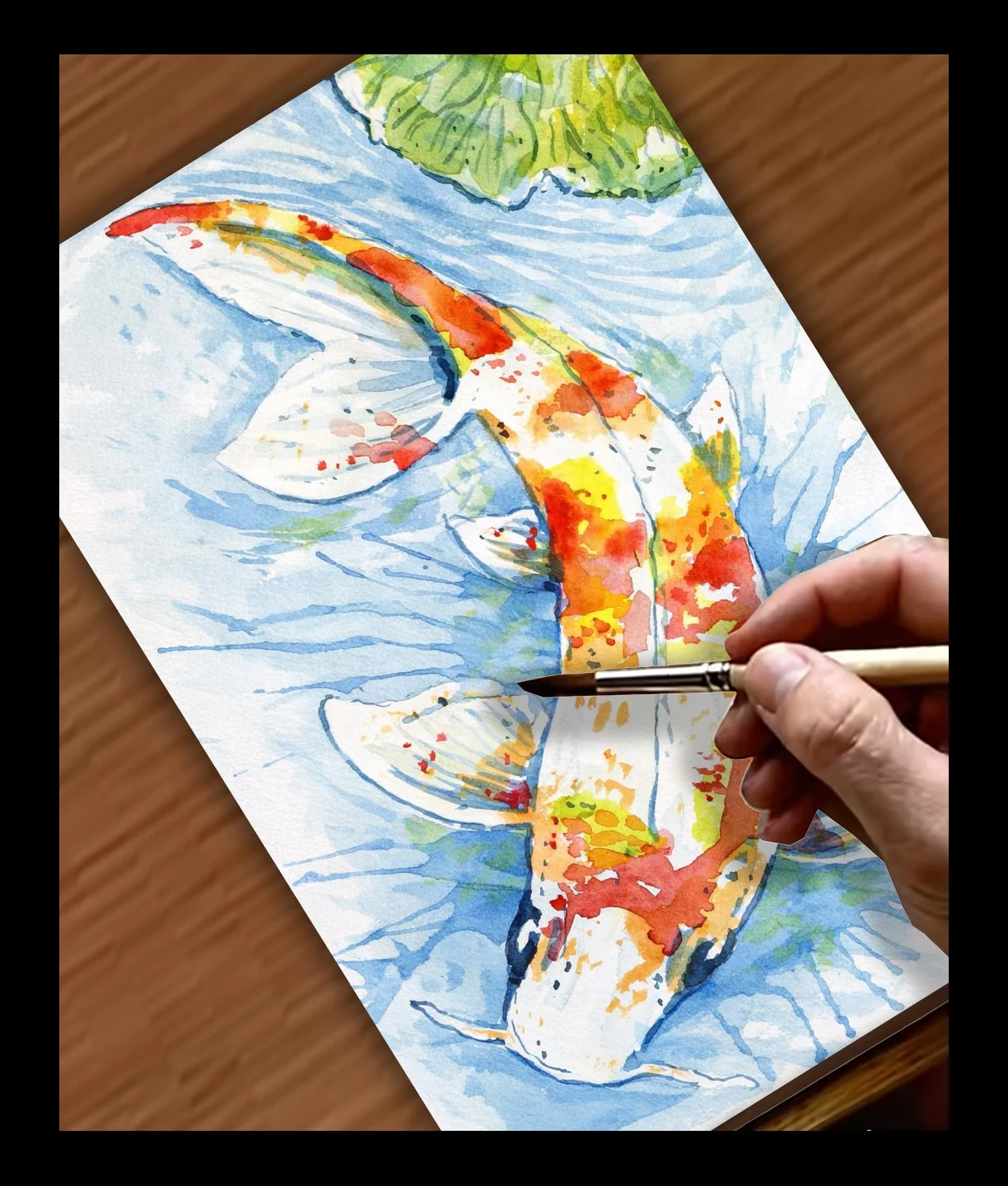
Koi Pond 9x12 inches
Koi Pond
This class is designed as a 60–120 minute session, with the duration tailored to the number of participants and the depth of instruction requested by the host organization. The lesson is highly adaptable, allowing it to function as either an in-depth instructional experience or a more relaxed, guided creative session.
Due to its engaging format and flexible structure, this class is especially popular in Watercolor & Wine settings, where it offers an enjoyable balance of artistic exploration, social interaction, and accessible instruction without sacrificing artistic substance.
Lesson 3 of the Watercolor Methodology, taught by Tim Thomas, focuses on painting a koi in a garden pond using the 9-pigment color technique. This approach introduces a positive “ghosting” method, which allows the artist to preserve the white of the paper while gradually building surrounding layers of pigment. By “ghosting” the subject onto the substrate, the background and environmental elements are developed first, strengthening and emphasizing the focal subject without the need to draw the subject in advance.
Using the ghosting technique, the artist allows the subject to emerge naturally through contrast and negative space rather than line work. This method reinforces painting from the background forward, using the contrast of dark versus white to create clarity, movement, and visual impact. Composition and spacing are key elements of the lesson, including subject placement, the offset relationship between the koi and lily pads, and the balance of positive and negative space. Masking techniques are demonstrated as a tool for controlling light and preserving highlights. Students also learn to create and define lines through contrast, color variation, texture, and value rather than outlines.
Instruction includes an in-depth explanation of the nine pigments that form the three perfect triads central to this methodology, along with guidance on paper selection—brand, type, and weight—and the specific brushes used to achieve precision and expressive control.
Additional foundational elements covered in the lesson include pigment application, water control, value development, and one of the most critical concepts in painting: depth. Students learn how to clearly establish foreground, midground, and background, resulting in a balanced, luminous, and visually engaging watercolor composition.
Watercolor Methodology: Watercolor Success is Not Magic - It’s Method!
by Tim & Terri Thomas (Class for Beginner/ Intermediate)
Lesson 4
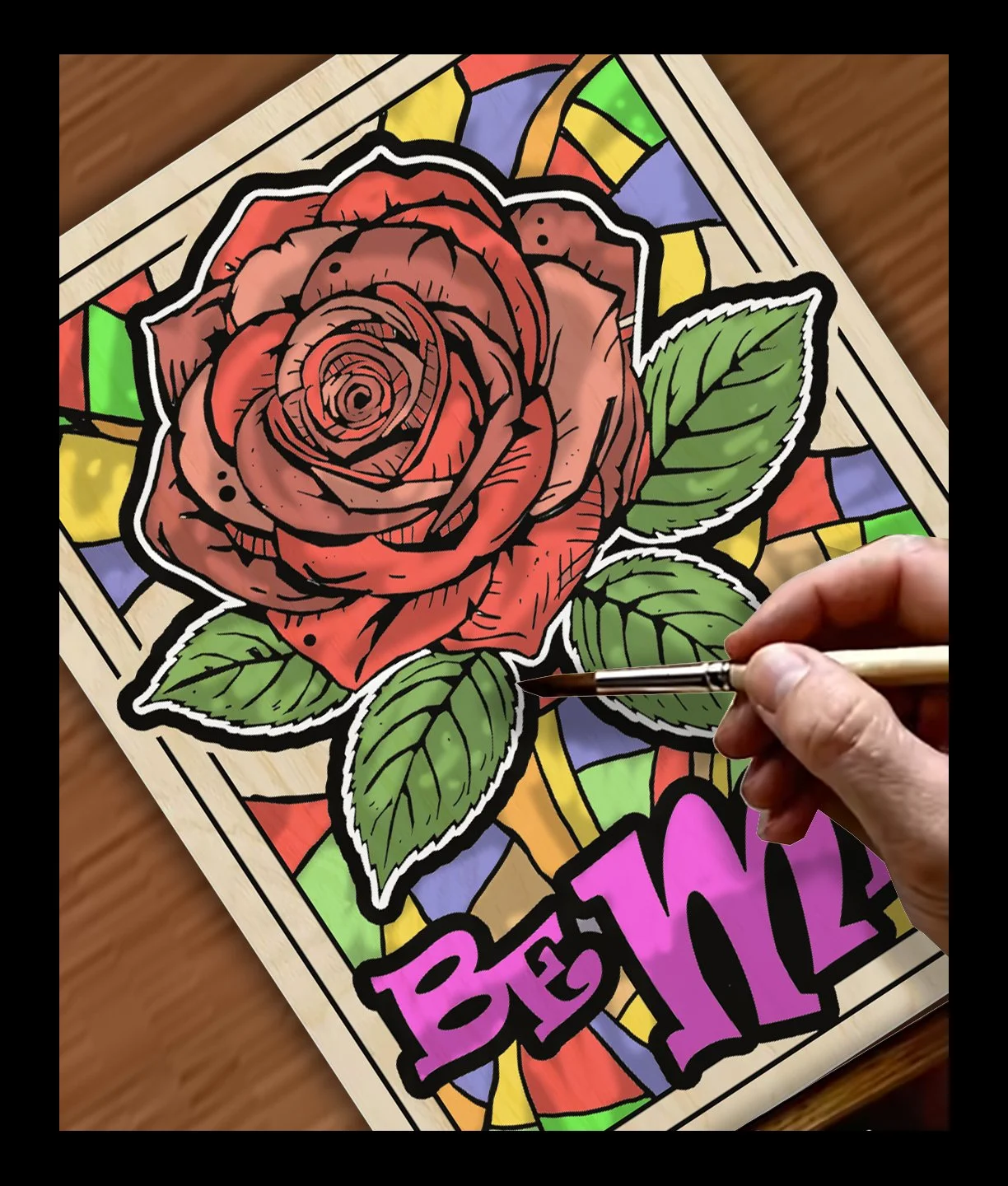
Watercolor on Wood 9x12 inches
Paint on Wood
This class is designed as a 60–120 minute session, with the duration tailored to the number of participants and the depth of instruction requested by the host organization. The lesson is highly adaptable, allowing it to function as either an in-depth instructional experience or a more relaxed, guided creative session.
Due to its engaging format and flexible structure, this class is especially popular in Watercolor & Wine settings, where it offers an enjoyable balance of artistic exploration, social interaction, and accessible instruction without sacrificing artistic substance.
Lesson 4 of the Watercolor Methodology, taught by Tim Thomas, introduces students to watercolor painting on wood as an alternative substrate. This lesson focuses on properly preparing the wood surface using gum arabic, watercolor ground, and ox gall, creating a receptive ground that allows watercolor pigments to behave with control and luminosity similar to traditional paper.
A key emphasis of this lesson is Triad 3, highlighting its staining and transparent pigment properties. Students revisit and deepen their understanding of the characteristics of all nine pigments used in the methodology, with particular attention given to how pigment behavior changes when applied to nontraditional surfaces. This reinforces the importance of understanding pigment composition, transparency, staining qualities, and flow—critical knowledge for any professional watercolor artist.
The lesson incorporates a positive laser-etched subject, allowing students to focus on pigment layering, water management, and the interaction of Triad 3 pigments with the prepared wood surface. Through controlled layering and intentional water use, students explore how transparent, staining pigments build depth and form without reliance on heavy value shifts or opaque effects.
This session also provides a deeper examination of the makeup of professional-grade watercolors and explains why it is essential for artists to know how and where to research pigment properties, empowering them to make informed material choices beyond brand names.
Instruction continues to reinforce the 9-pigment system built on three perfect triads, along with guidance on substrate selection, surface preparation, and the specific brushes used in this methodology. Foundational watercolor principles—including color application, water control, and value development—are further explored, with strong emphasis placed on one of the most critical visual elements: depth. Students learn to clearly establish foreground, midground, and background, resulting in a cohesive, dimensional, and expressive watercolor painting on wood.
Watercolor Methodology: Watercolor Success is Not Magic - It’s Method!
by Tim & Terri Thomas (Class for Beginner/ Intermediate)
Lesson 5
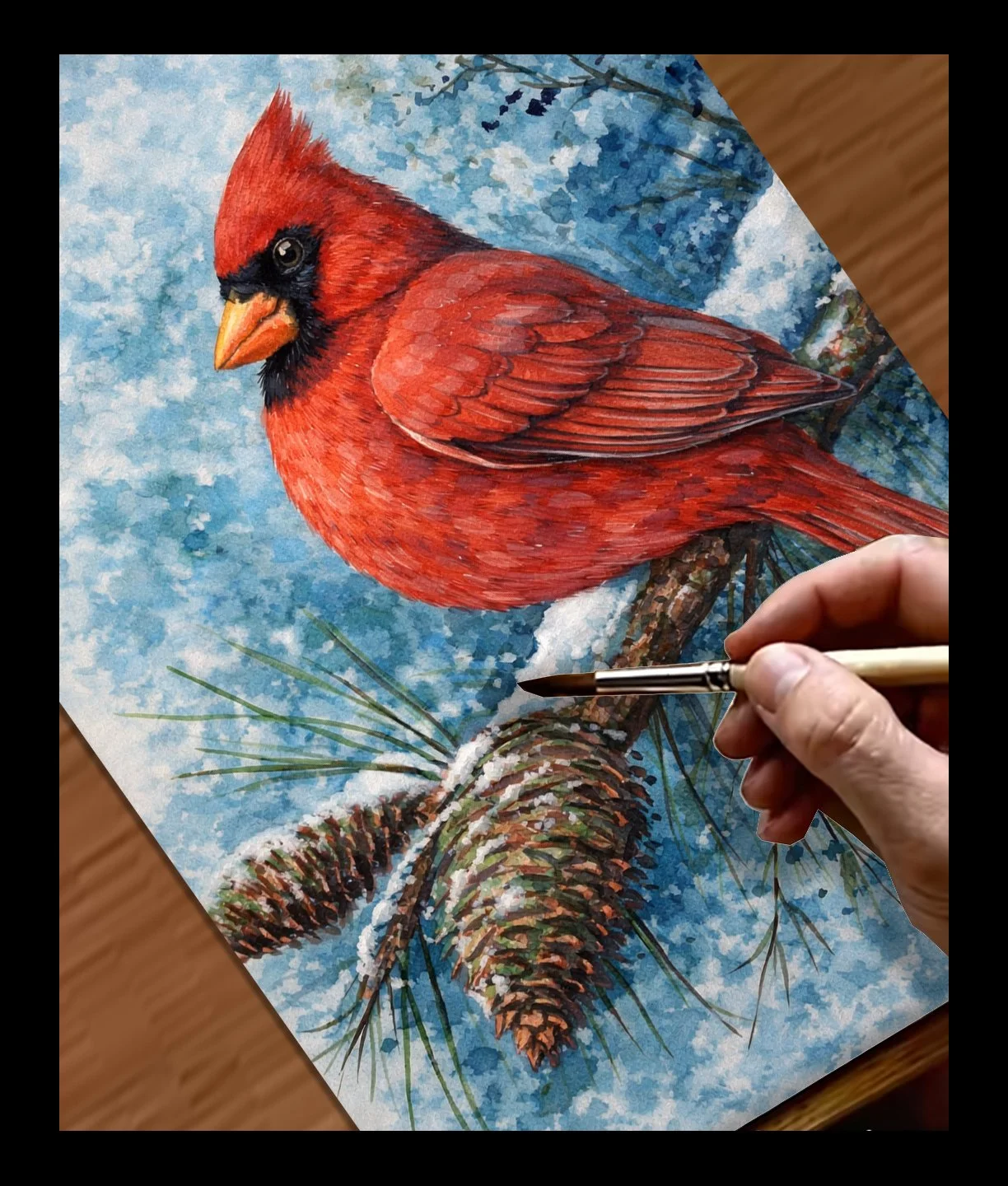
Red Cardinal 9x12 inches
Red Cardinal
This class is designed as a 60–120 minute session, with the duration tailored to the number of participants and the depth of instruction requested by the host organization. The lesson is highly adaptable, allowing it to function as either an in-depth instructional experience or a more relaxed, guided creative session.
Due to its engaging format and flexible structure, this class is especially popular in Watercolor & Wine settings, where it offers an enjoyable balance of artistic exploration, social interaction, and accessible instruction without sacrificing artistic substance.
Lesson 5 of the Watercolor Methodology, taught by Tim Thomas, centers on painting a red bird—most often a cardinal—as a study in color layering, perception, and visual sequencing. This lesson challenges students to shift how they see color by learning to identify colors as layered relationships rather than single values, and by painting the first color they perceive last. Through transparent watercolor glazing, students build complex reds and surrounding hues that evolve as successive layers are applied—much like stacking panes of glass, where each layer subtly alters the colors beneath it.
This lesson introduces a more substantial substrate: Arches 300 lb watercolor paper, allowing students to experience a heavier weight within a familiar paper type. Instruction includes a deeper examination of how thicker paper absorbs water and pigment, how it responds differently from lighter weights, and how these characteristics affect timing, flow, and layering. Students also learn proper preparation techniques, including tearing and surface cleaning to ensure the surface is ready for controlled washes.
The session reinforces the 9-pigment system built on three perfect triads, with continued guidance on pigment selection, brush choice, and how each tool functions within the broader methodology. Emphasis is placed on intentional color application, refined water control, and accurate value development.
A key focus of this lesson is depth, with students concentrating on the subject while employing a very subtle background painting and snow technique. By keeping background elements soft, restrained, and atmospheric, students learn how minimal mark-making and controlled values can push the background back, allowing the cardinal to remain dominant in the composition. This approach reinforces the clear establishment of foreground, midground, and background, resulting in a luminous, balanced, and visually engaging watercolor painting.
Watercolor Methodology: Watercolor Success is Not Magic - It’s Method!
by Tim & Terri Thomas (Class for Beginner/ Intermediate)
Lesson 6
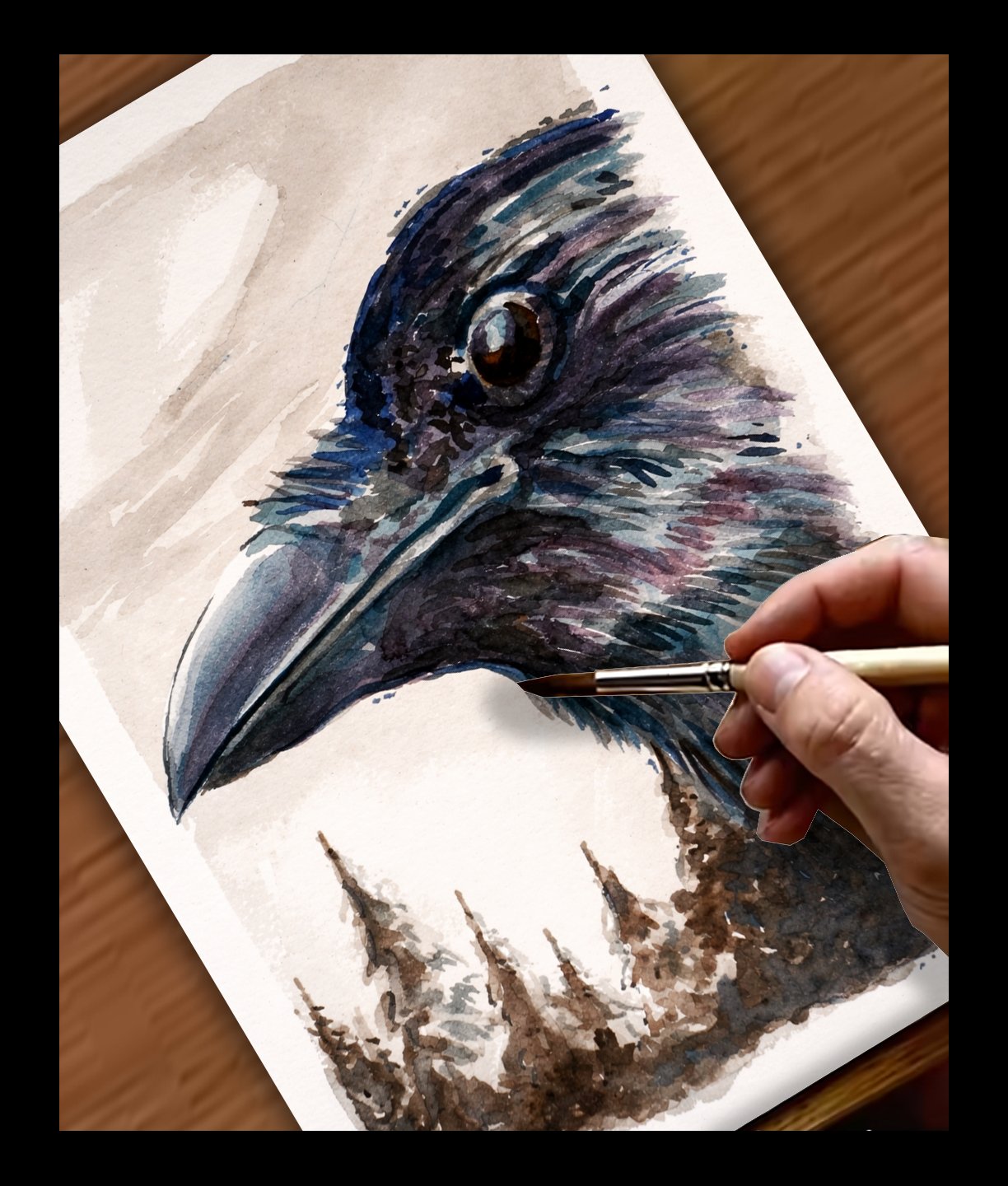
The Raven 9x12 inches
The Raven
This class is designed as a 60–120 minute session, with the duration tailored to the number of participants and the depth of instruction requested by the host organization. The lesson is highly adaptable, allowing it to function as either an in-depth instructional experience or a more relaxed, guided creative session.
Due to its engaging format and flexible structure, this class is especially popular in Watercolor & Wine settings, where it offers an enjoyable balance of artistic exploration, social interaction, and accessible instruction without sacrificing artistic substance.
Lesson 6 of the Watercolor Methodology, taught by Tim Thomas, focuses on painting a black bird—a raven—as a study in gray value layering, perception, and visual sequencing. This lesson challenges students to rethink how they see color, teaching them to recognize colors as layered relationships rather than single values and to paint the first color they perceive last. Through transparent watercolor glazing, students build complex gray values and surrounding darks that evolve naturally with each successive layer, creating depth and subtle tonal shifts.
A distinctive aspect of this lesson is the exploration of perfect triads within the 9-pigment system. When equal amounts of each pigment in a perfect triad are mixed, they produce neutral gray rather than brown, which is the typical result when mixing most primary triads. Because the methodology avoids using the pigment black—a common challenge for beginner watercolorists—students learn to achieve the illusion of black or deep dark tones by layering grays, mastering subtle transitions and tonal control to create dramatic, convincing darkness without relying on opaque pigments.
The session reinforces the 9-pigment system built on three perfect triads, providing continued guidance on pigment selection, brush choice, and how each tool functions within the methodology. Emphasis is placed on intentional color application, refined water control, and precise value development, ensuring that students gain confidence in managing complex tonal relationships.
Again, a key focus of the lesson is depth, with students concentrating on the raven while employing a subtle background painting and snow technique. By keeping background elements soft, restrained, and atmospheric, students learn how minimal mark-making and controlled values can visually push the background back, allowing the raven to remain the dominant focal point. This approach reinforces the clear establishment of foreground, midground, and background, resulting in a luminous, balanced, and visually compelling watercolor painting.
Watercolor Methodology: Watercolor Success is Not Magic - It’s Method!
by Tim & Terri Thomas (Class for Beginner/ Intermediate)
Lesson 7
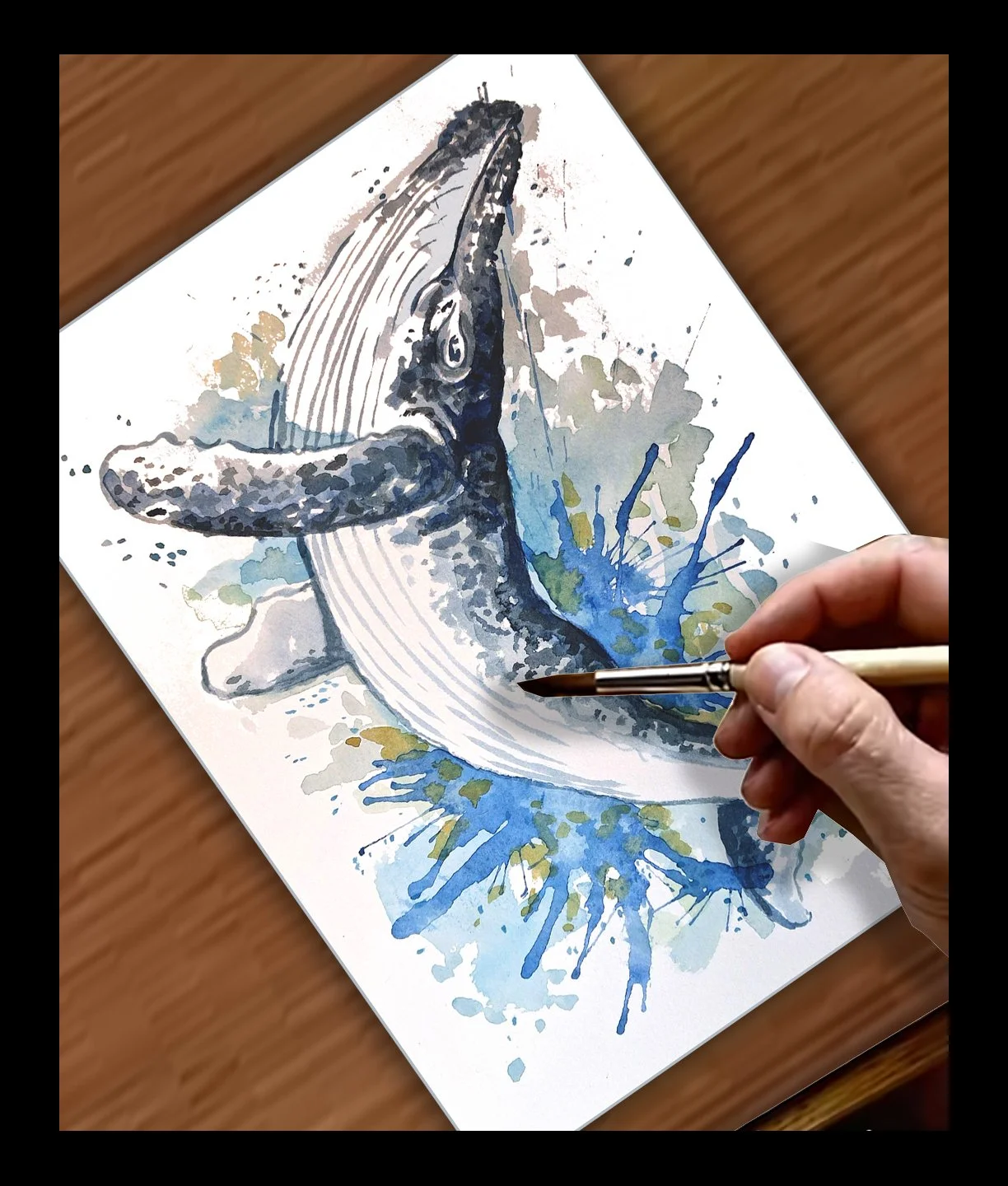
Whale 9x12 inches
Humpback Whale
This class is designed as a 60–120 minute session, with the duration tailored to the number of participants and the depth of instruction requested by the host organization. The lesson is highly adaptable, allowing it to function as either an in-depth instructional experience or a more relaxed, guided creative session.
Due to its engaging format and flexible structure, this class is especially popular in Watercolor & Wine settings, where it offers an enjoyable balance of artistic exploration, social interaction, and accessible instruction without sacrificing artistic substance.
Lesson 7 of the Watercolor Methodology, taught by Tim Thomas, focuses on painting a humpback whale using a blue monochromatic approach within the 9-pigment color technique. This lesson introduces the positive “ghosting” method, allowing the artist to preserve the white of the paper while gradually building surrounding layers of pigment. By ghosting the subject onto the substrate, students develop the background and environmental elements first, strengthening and emphasizing the focal subject without the need to draw the whale in advance.
Through this ghosting technique, the whale emerges naturally through contrast and negative space rather than line work. The lesson reinforces painting from the background forward, using the interplay of dark values against preserved whites to create clarity, movement, and visual impact. Composition and spacing are emphasized, including thoughtful subject placement, the offset relationship between the whale and the surrounding water, and the balance of positive and negative space.
Students layer blues and carefully mixed values on the subject to create a convincing three-dimensional form, introducing concepts of light, shade, and shadow within a limited color range. The lesson also explores identifying complementary colors on the color wheel and selectively applying them through controlled splash techniques, including the use of a straw technique to add energy, texture, and motion to the water.
Instruction includes an in-depth explanation of the nine pigments that form the three perfect triads central to this methodology, along with guidance on paper selection—brand, type, and weight—and the specific brushes used to achieve both precision and expressive control. Students learn to create and define lines through contrast, color variation, texture, and value rather than outlines, reinforcing a painterly and confident watercolor approach.
Additional foundational elements covered in the lesson include pigment application, water management, and value development, with strong emphasis on one of the most critical concepts in painting: depth. Students learn how to clearly establish foreground, midground, and background, resulting in a balanced, luminous, and visually engaging monochromatic watercolor composition.
Watercolor Methodology: Watercolor Success is Not Magic - It’s Method!
by Tim & Terri Thomas (Class for Beginner/ Intermediate)
Lesson 8
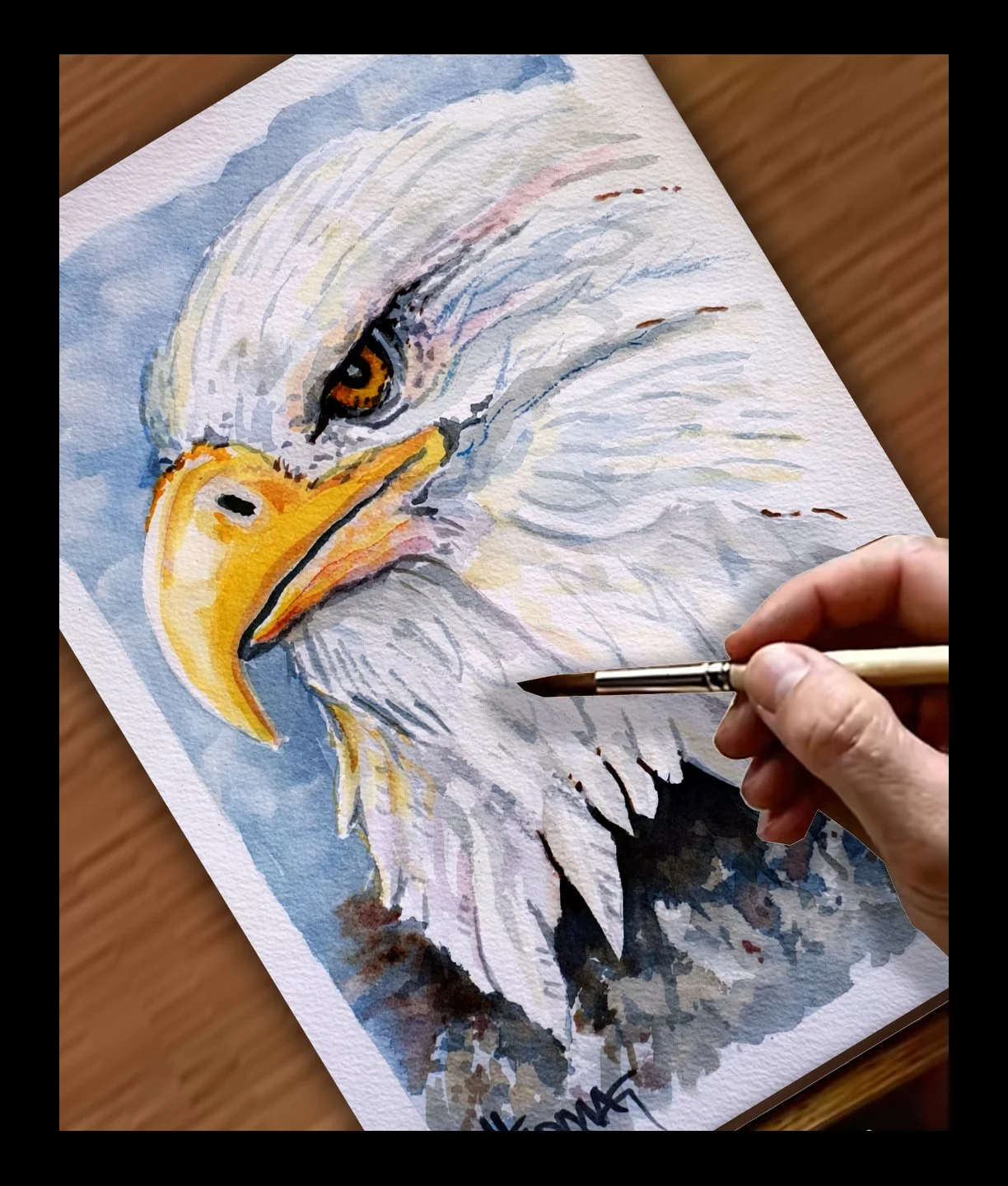
Bald Eagle 9x12 inches
Bald Eagle
This class is designed as a 60–120 minute session, with the duration tailored to the number of participants and the depth of instruction requested by the host organization. The lesson is highly adaptable, allowing it to function as either an in-depth instructional experience or a more relaxed, guided creative session.
Due to its engaging format and flexible structure, this class is especially popular in Watercolor & Wine settings, where it offers an enjoyable balance of artistic exploration, social interaction, and accessible instruction without sacrificing artistic substance.
Lesson 8 of the Watercolor Methodology, taught by Tim Thomas, centers on painting a Bald Eagle with a special focus on preserving the luminous white of the subject while skillfully applying shade, shadow, and light effects to give the white areas form, depth, and realism. Rather than outlining or overworking the whites, students learn to model them through subtle surrounding values and carefully controlled washes, allowing the brilliance of the paper to serve as the light source.
A distinctive aspect of this lesson is the exploration of perfect triads within the 9-pigment system. When equal amounts of pigments from a perfect triad are mixed, they produce a neutral gray rather than brown—a key characteristic that sets this system apart from traditional primary triads. Because the Watercolor Methodology does not use black pigment, students learn to create the illusion of deep darks and near-black values by layering transparent grays. This builds richness, depth, and optical complexity while avoiding the flat, heavy appearance that black often creates in watercolor.
The session reinforces the 9-pigment system built on three perfect triads, with continued guidance on pigment selection, brush choice, and how each tool functions within the methodology. Strong emphasis is placed on intentional color application, refined water control, and precise value development, helping students gain confidence in managing complex tonal relationships and subtle transitions.
A key focus of the lesson is depth, with students concentrating on the eagle as the primary subject while employing a subtle, atmospheric background and snow technique. By keeping background elements soft, restrained, and suggestive rather than detailed, students learn how minimal mark-making and controlled values can visually push the background backward. This allows the Bald Eagle to remain the dominant focal point while reinforcing a clear sense of foreground, midground, and background, resulting in a luminous, balanced, and visually compelling watercolor painting.
Watercolor Methodology: Watercolor Success is Not Magic - It’s Method!
by Tim & Terri Thomas (Class for Beginner/ Intermediate)
Lesson 9
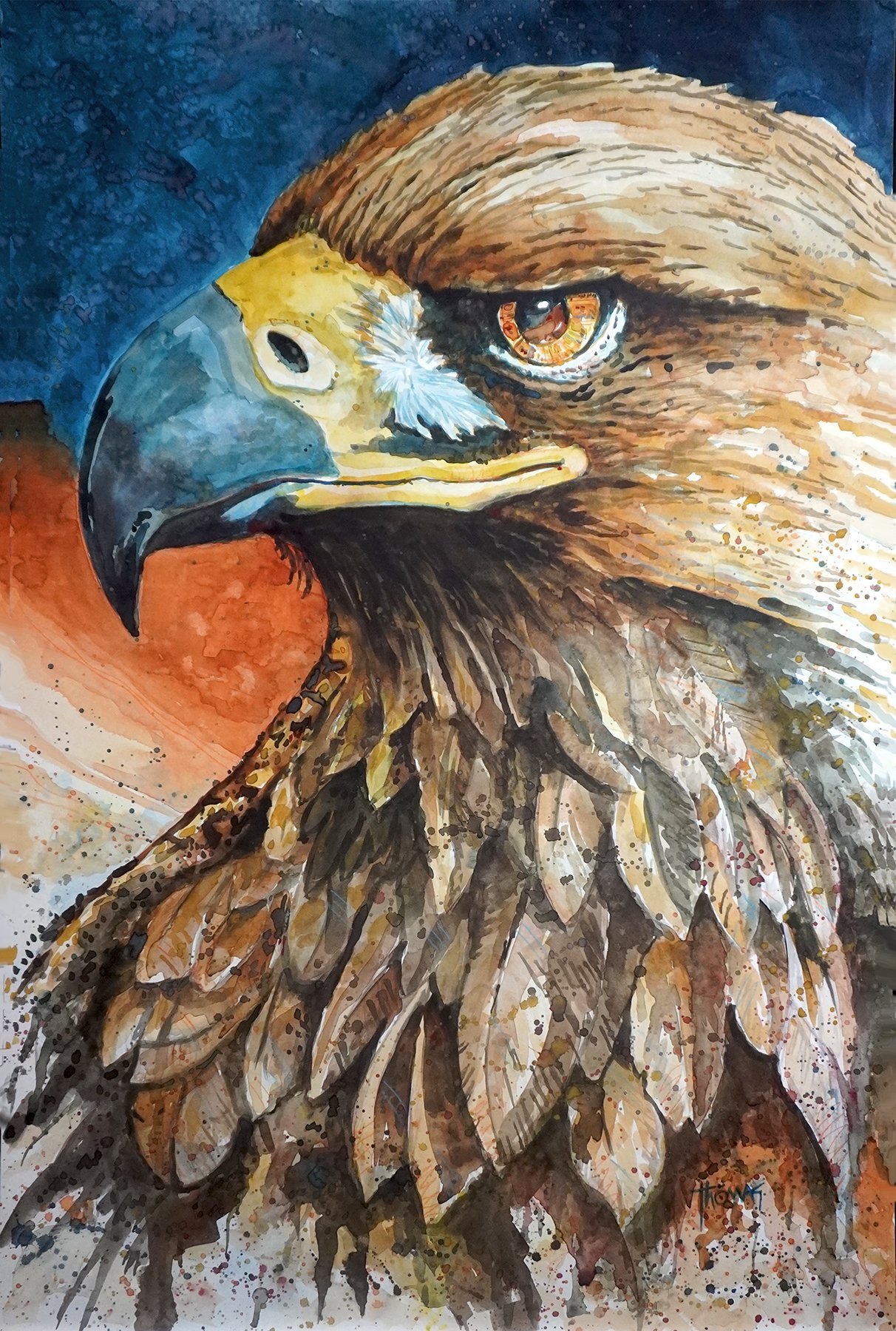
Watercolor Full-Size
Watercolor Full-Size
This class is designed as a 1 full day session (6 hrs), with the duration tailored to the number of participants and the depth of instruction requested by the host organization. The lesson is highly adaptable, allowing it to function as either an in-depth instructional experience or a more relaxed, guided creative session.
Lesson 9: Full-Size Watercolor
Lesson 9 is designed for students who have completed the majority of Tim’s previous lessons and are ready for an advanced, immersive painting experience. Conducted as a one-on-one session or in a very small class setting, this full-day (6-hour) workshop provides step-by-step instruction with individualized guidance and focused critique.
Students complete a full-size 20 × 30-inch watercolor painting on CP illustration board or full watercolor sheets, working with the 9-pigment system and perfectly balanced triads. This capstone-style project deepens mastery of mixing true neutral grays—avoiding muddy browns—and achieving deep, resonant darks and near-black values through layered transparent glazes rather than black pigment. The glazing process builds luminous depth, richness, and optical complexity while maintaining color harmony.
Throughout the day, emphasis is placed on intentional pigment selection, appropriate brush choice, precise water control, and disciplined value development. Students strengthen their understanding of spatial structure by clearly establishing foreground, midground, and background relationships.
Students paint their own subject.
Watercolor Methodology: Watercolor Success is Not Magic - It’s Method!
by Tim & Terri Thomas (Class for Intermediate/Advanced)
Lesson 10
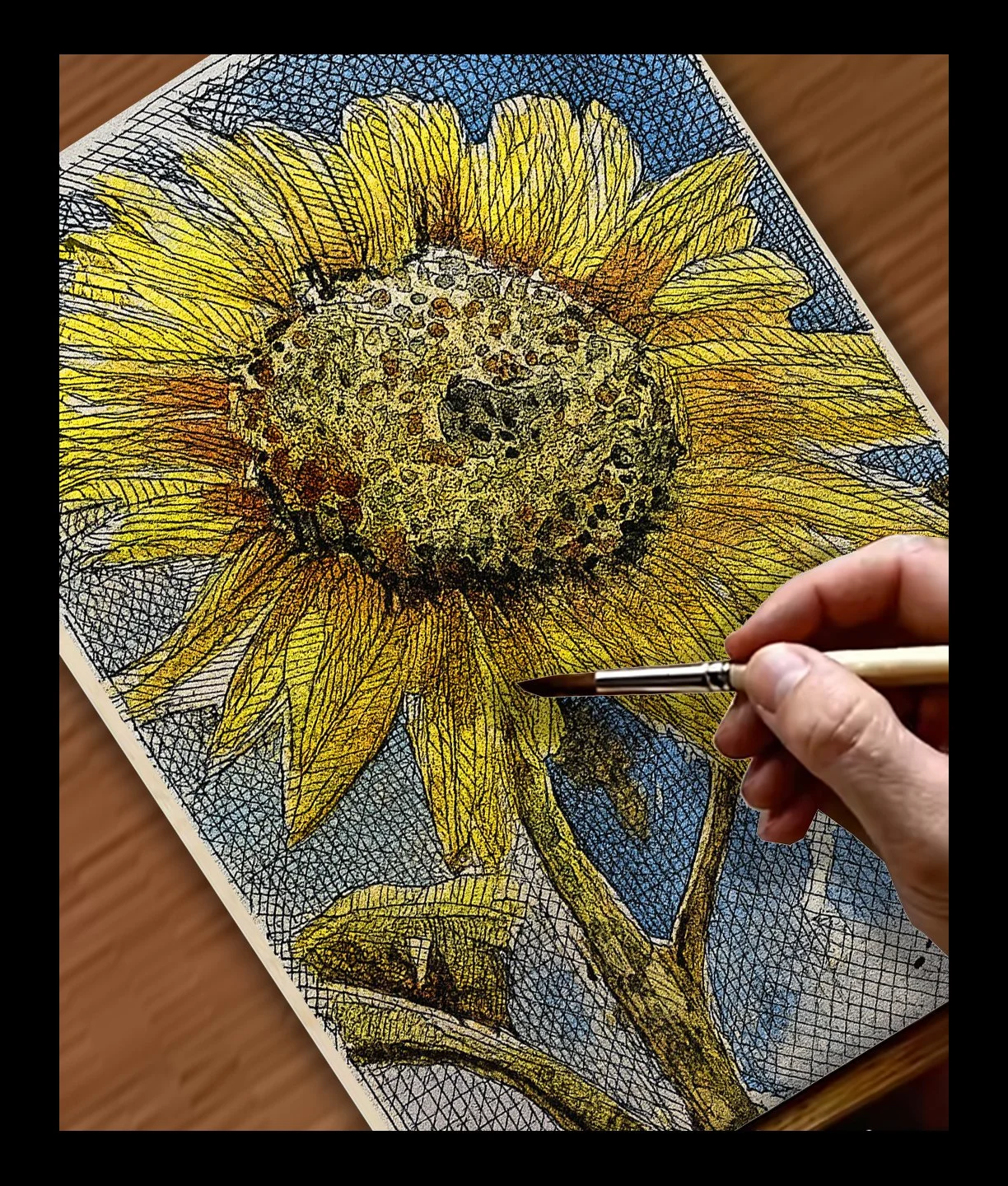
Watercolor and Pen & Ink 9x12 inches
Pen, Ink, and Watercolor
This class is designed as a 2 day, 180–240 minute session, with the duration tailored to the number of participants and the depth of instruction requested by the host organization.
Day 1 is Pen and Ink techniques
Day 2 is Watercolor techniques over the Pen & Ink.
The lesson is highly adaptable, allowing it to function as either an in-depth instructional experience or a more relaxed, guided creative session.
Lesson 10 of the Watercolor Methodology, taught by Tim Thomas, introduces students to creating compelling artwork using pen, ink, and watercolor. This lesson blends drawing and painting into a cohesive process, making it accessible by clearly covering foundational skills—everything from materials and surface preparation to texture techniques, color theory, and expressive special effects.
Students are guided through the essentials of building strong imagery, including mastering value, contrast, and definition, while learning how surface choices and mark-making influence the final result. This lesson is designed as both a technical and creative challenge, providing a framework that encourages exploration while offering structured guidance. Tim provides practical advice, proven techniques, and compositional strategies for rendering favorite places, environments, and animals with a level of detail and confidence many artists aspire to but rarely achieve.
The lesson introduces an additional substrate, Bristol board, and explores the effective use of both permanent and whiteboard-style markers, including when and why each is applied within the mixed-media process. Students learn a wide range of texture-building techniques, including stippling, hatching, crosshatching, parallel line work, and contour lines, to create form, movement, and visual interest before and during watercolor application.
Instruction includes an in-depth explanation of the nine pigments that form the three perfect triads central to this methodology, along with guidance on substrate selection—brand, type, and weight—and the specific brushes used to achieve precision and expressive control. The relationship between ink, watercolor, and paper absorbency is emphasized to ensure predictable, professional results.
Additional foundational elements covered in the lesson include pigment application, water control, and value development, with strong emphasis on one of the most critical concepts in painting: depth. Students learn how to clearly establish foreground, midground, and background, resulting in a balanced, luminous, and visually engaging pen, ink, and watercolor composition.
Watercolor Methodology: Watercolor Success is Not Magic - It’s Method!
by Tim & Terri Thomas (Class for Beginner/ Intermediate)
Lesson 11
Children’s Books
Children’s Books:
Writing, Illustrating, Self-Publishing
This class is designed as a 120–180 minute session, with the duration tailored to the number of participants and the depth of instruction requested by the host organization. The lesson is highly adaptable, allowing it to function as either an in-depth instructional experience or a more relaxed, guided creative session.
Due to its engaging format and flexible structure, this class is especially popular in Watercolor & Wine settings, where it offers an enjoyable balance of artistic exploration, social interaction, and accessible instruction without sacrificing artistic substance.
Lesson 11, taught by Tim Thomas, a nationally award-winning author, illustrator, and self-publisher, guides students through the complete journey of creating and publishing a children’s book, from concept to finished product. The lesson begins with writing, teaching how to take an idea and develop it into a compelling story, including character development and crafting the world and setting where the story unfolds. Students learn to illustrate their story, bringing both characters and environments to life, while mastering drawing to flats and applying effective layout and design protocols tailored for print.
The course also covers the practical aspects of self-publishing, including preparing print-ready files, uploading to platforms such as Amazon KDP and other print-on-demand services, and understanding essential publishing elements like ISBNs, barcodes, and the “This Book Belongs To” page. Finally, students explore strategies for marketing children’s books, gaining the tools and knowledge needed to share their creations with a broad audience. This lesson combines storytelling, illustration, design, and publishing expertise, giving students the confidence and skills to take their children’s book from an idea to a professionally produced, market-ready work.
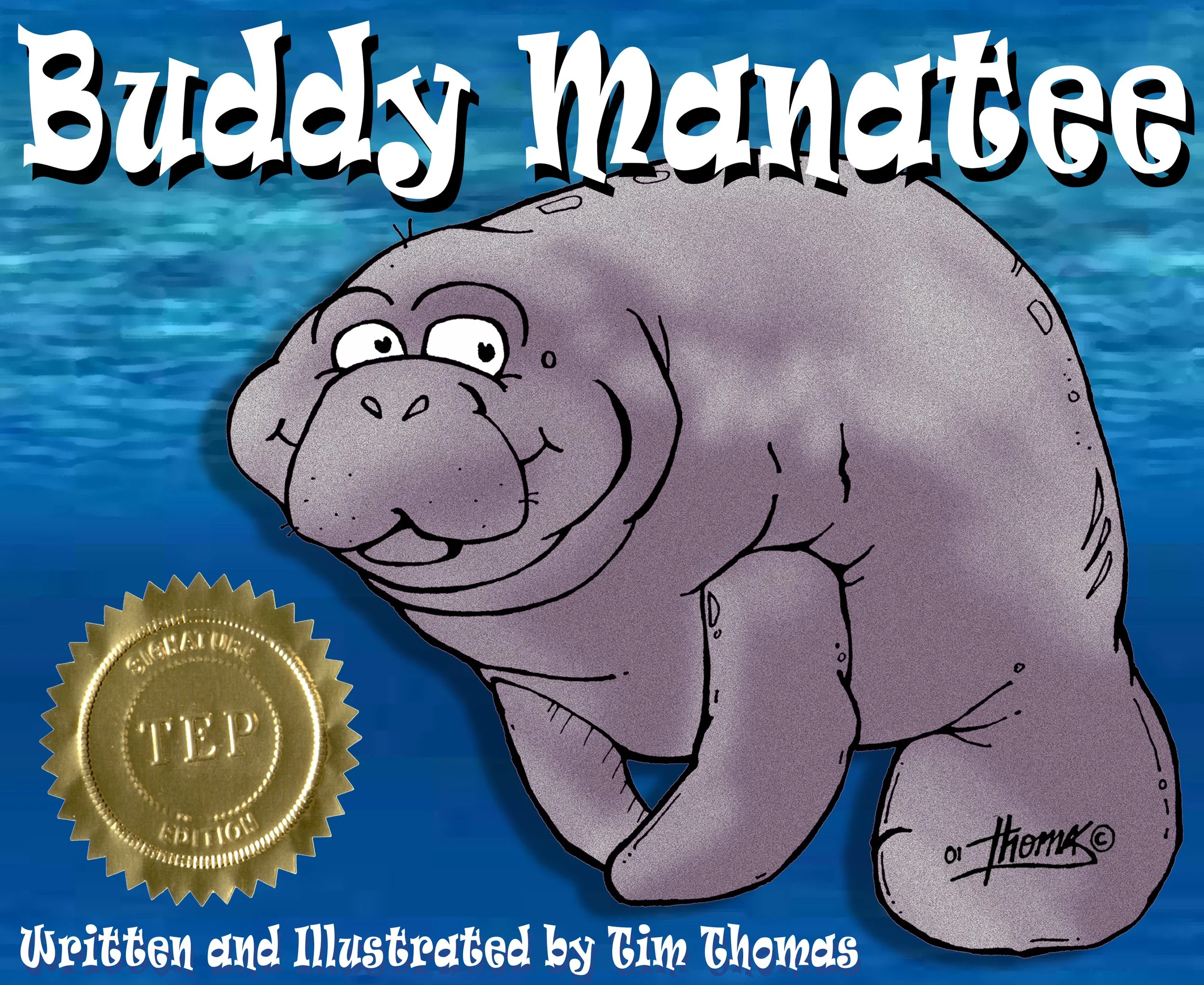
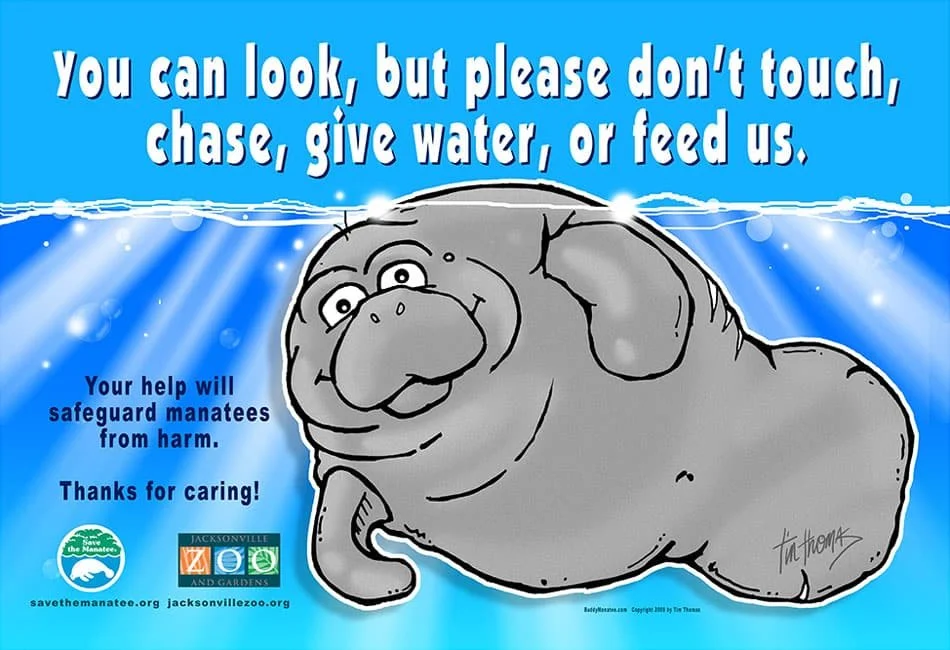
Tim is the creator of Buddy Manatee, the beloved main character featured in the books A Manatee Christmas and Buddy Manatee. Buddy has been widely used as an educational and advocacy character, appearing on environmental awareness signage, educational materials, apparel, and gift items produced for the Save the Manatee Club and other environmental groups and conservation organizations.
Watercolor Methodology: Watercolor Success is Not Magic - It’s Method!
by Tim & Terri Thomas (Class for Beginner/ Intermediate)